

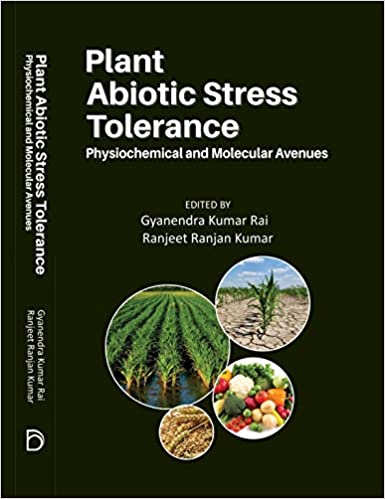
Plant Abiotic Stress Tolerance: Physiochemical and Molecular Avenues
Hardback
eBook

About The Book
The book entitled “Plant Abiotic Stress Tolerance: Physiochemical and Molecular Avenues” mainly focus on - how plants adopt to abiotic stress and various biotechnological and molecular approaches for improving the stress tolerance in crop plants for mitigating the effect of global climate change. This book presents a holistic view of the general principles of stress tolerance, signal transduction and regulation of gene expression. Further, chapters especially on heavy metal toxicity, role of metabolites, nutrient and halophytes in defense mechanisms are worth reading. Lastly, a chapter has been dedicated on how to develop climate smart crop through plant breeding, genetic engineering and Agronomic approaches. The book consist of thirteen chapters written by reputed researches, and scientists from SAUs and ICAR research institutes. We have tried to integrate molecular details with overall plant adaptation and physiology. This book serves as a complete package on the basics, applications and management for abiotic stress tolerance in plants. This book has been written keeping in mind, the requirements of undergraduates, post graduate students and beginners in the area of stress biology, plant molecular biology, plant physiology, agriculture, biochemistry and environmental biology.
About the Author
Dr. Gyanendra Kumar Rai
Dr. Gyanendra Kumar Rai obtained M.Sc. and Ph.D. from University of Allahabad, Allahabad, UP, India. He is serving as Assistant Professor (Sr. Scale) Biochemistry at School of Biotechnology, Sher-e-Kashmir University of Agricultural Sciences and Technology of Jammu. His research areas include stress physiology, proteomics and molecular biology and nutritional physiology.
Related Subjects
Reviews (0)
Related Books